Plywood and block board often sit side by side on the same quote. They look similar from the face, but they are built differently — and that changes where each one performs best.
How they are built
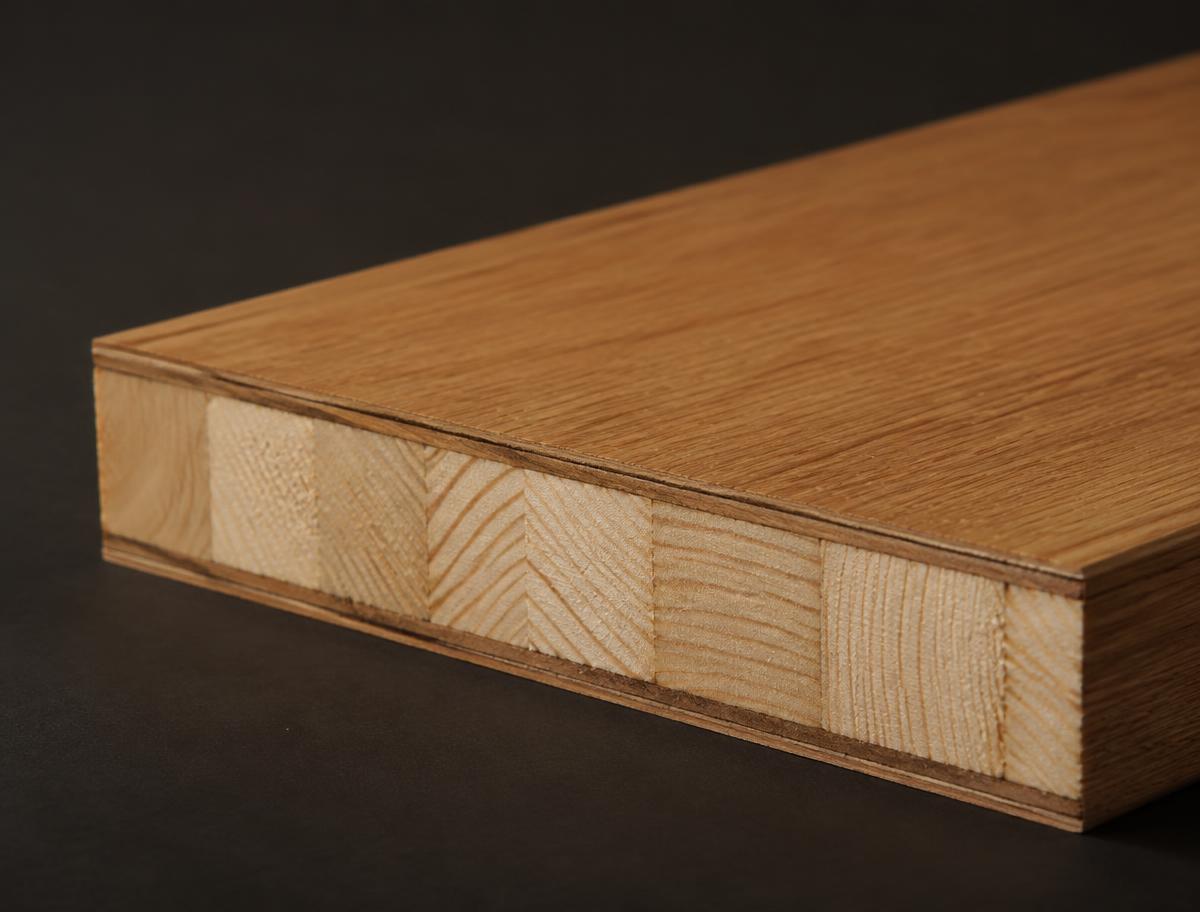
Plywood is made from thin veneers glued in cross-layers, which gives it strength in every direction. Block board has a core of solid timber strips sandwiched between veneers, which keeps it light yet rigid.
Where block board works best
- Long shelves and bookcases
- Table tops and counters
- Large panels and partitions
The timber-strip core resists bending across long spans, so it is a natural choice when length matters more than thin cross-sections.
Where plywood works best
- Wardrobes and kitchen cabinets
- Furniture that needs strong screw holding
- Curved or detailed work and areas needing moisture resistance
Side by side
| Plywood | Block Board | |
|---|---|---|
| Construction | Cross-layered veneers | Timber-strip core with veneer faces |
| Strength | Strong in all directions | Rigid over long spans |
| Weight | Moderate | Light |
| Best for | Cabinets, wardrobes, furniture | Shelves, tables, partitions |
Our advice
You do not have to choose only one. Many good interiors use plywood for carcasses and block board for long shelves and table tops. Tell us about your project and we will suggest the right mix.
Need help choosing?
Talk to the STEEL HOME team for advice and a quote.